Electric Vehicle (EV) Guide
Thinking about buying or leasing an electric vehicle (EV) for your home or business? Already own an EV and want to learn more about charging options in the City of Richmond? Wherever you are in your EV journey, you’ll find information and resources below to help you on your way.
An electric vehicle (EV) is any vehicle that runs either fully or partially on electric energy. There are two types to choose from: Battery Electric Vehicles (BEVs) and Plug-In Hybrid Electric Vehicles (PHEVs). There are number of BEVs and PHEVs makes and models available on the market and the number continues to grow as car manufacturers shift towards EVs.
Explaining Electric Vehicles
Explaining BEVs and PHEVs
A battery electric vehicle operates fully via a battery-powered electric motor. Fully electric vehicles typically have a range of 100-400 miles per full charge. As technology improves, ranges continue to increase, although they can vary widely across models and are impacted by factors such as weather, terrain, and driver behavior.
Battery Electric Vehicles (BEVs)
A plug-in hybrid electric vehicle has both a battery-powered electric motor and an internal combustion engine. When the electric range is exhausted, the vehicle is powered by gasoline. A typical plug-in hybrid has an electric range of 20-40 miles per charge, although ranges vary by make and model.
Plug-In Hybrid Electric Vehicles (PHEVs)
Sites like www.fueleconomy.gov can help you find and compare existing models that meet your needs and budget.
Why Choose An Electric Vehicle?
Expanding access to EVs and EV charging is a City priority. Not only does RVAgreen 2050 call for facilitating the transition to electric vehicles as an integral part of reaching our net-zero goals, but many other community-driven plans and programs also highlight the value of EVs.
A Richmond 300 Priority
Richmond 300, our City’s comprehensive plan, encourages the adoption of low-emission vehicles for all Richmonders a key objective for reducing GHG emissions.
A Richmond Connects Priority
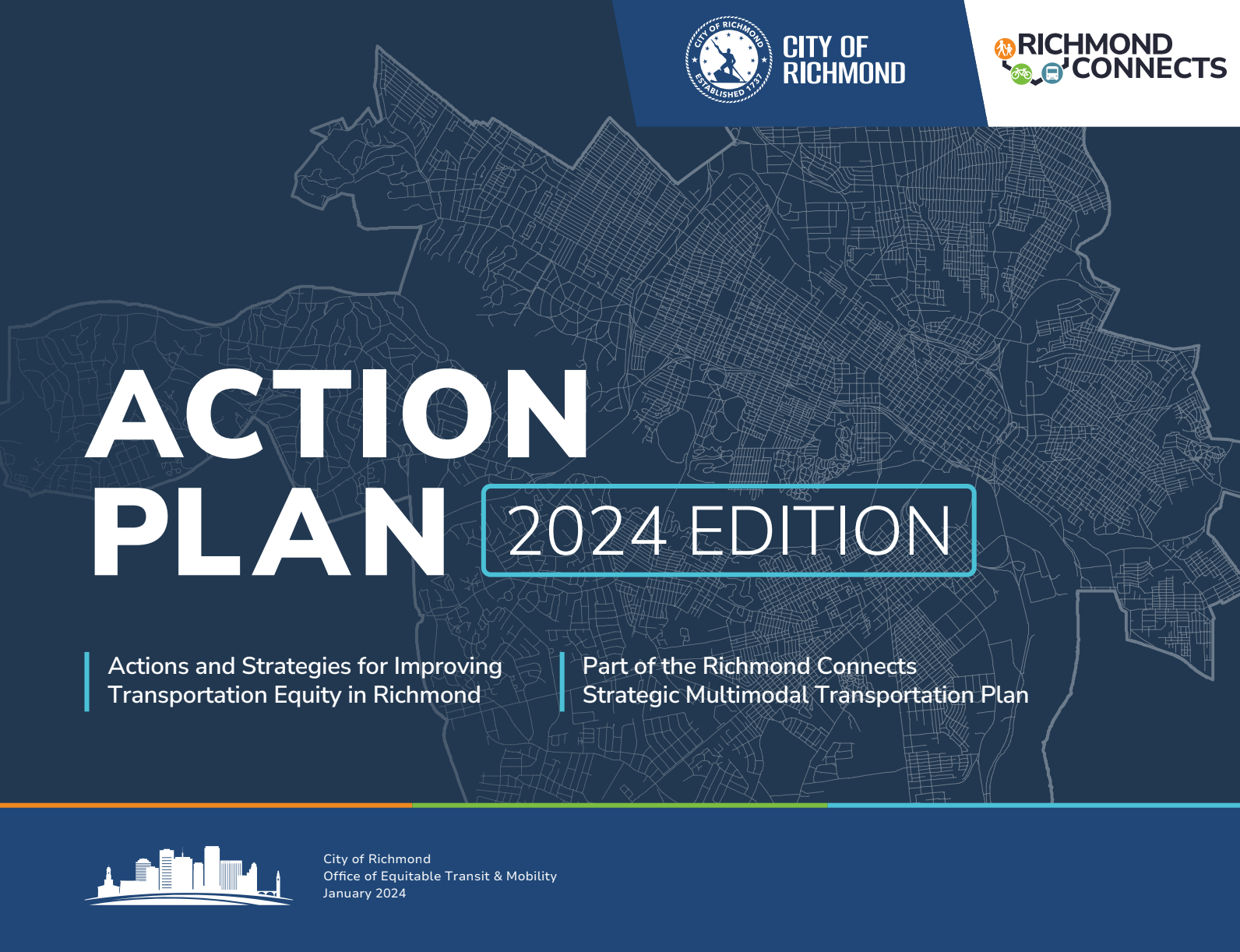
Nested under Richmond 300, the Richmond Connects Action Plan calls for the equitable installation of EV chargers and increased access to EVs across the City.
Benefits of EVs
While walking, biking and public transportation are the most environmentally-friendly ways to travel around Richmond, those options aren’t feasible. EVs are a great alternative for those who want to reduce their environmental impact. If you rely on cars or light-duty trucks to get around, buying or leasing an electric alternative is one way you can reduce your carbon footprint.
Fully electric and plug-in hybrid EVs are more fuel efficient and produce no tailpipe emissions when operating in electric-only mode.
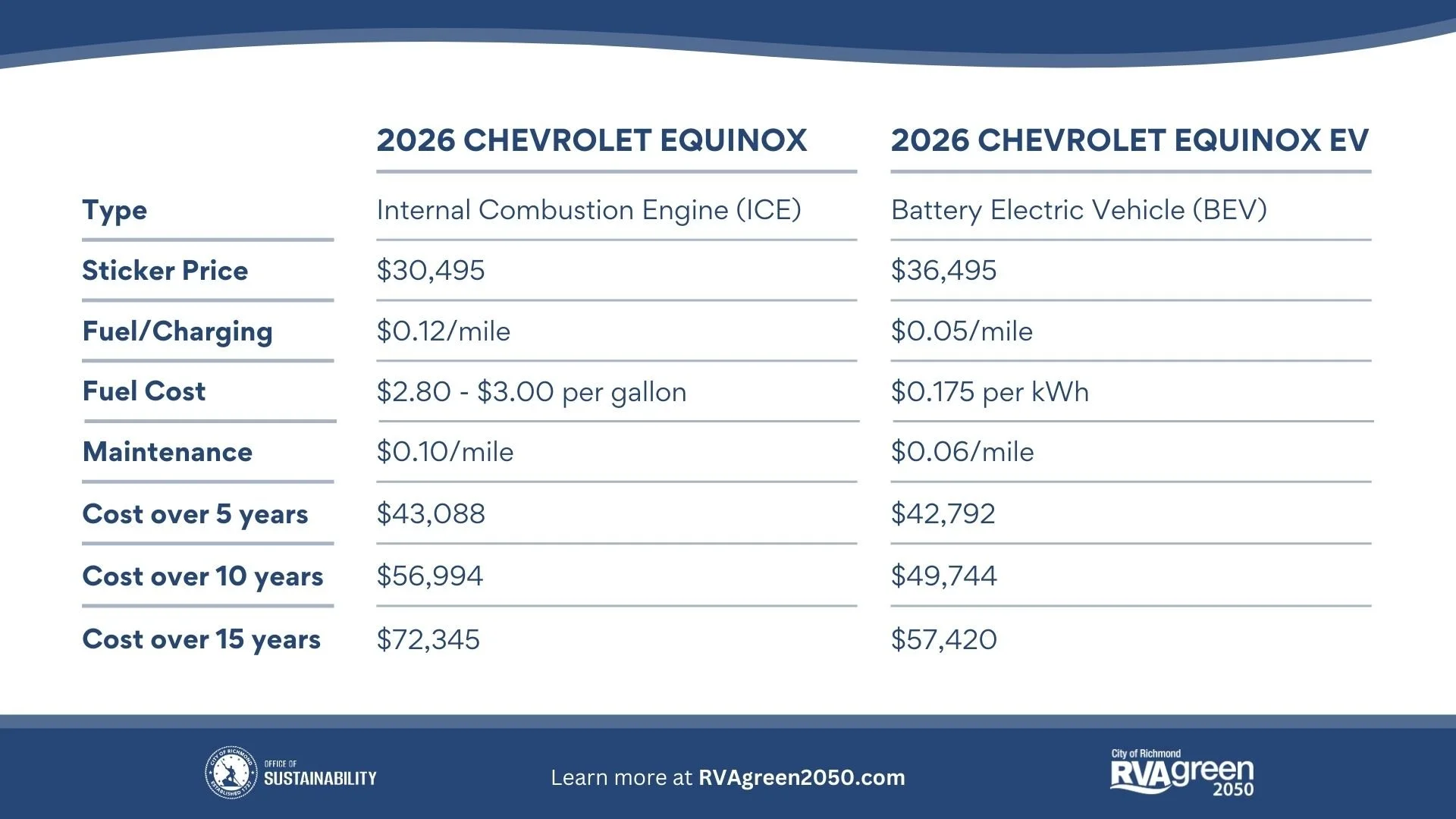
EVs are Cost Competitive with Gas-Powered Vehicles
EVs come in all shapes and sizes and are evolving at a fast pace. Although EVs can have higher sticker prices than gas- or diesel-powered options, EVs are cost-competitive and can save drivers money within the first 5-7 years.
Studies show that, due to reduced fuel and maintenance needs, EV drivers can expect to save $6,000-10,000 over the lifetime of the car, with certain models offering even higher savings.
Explaining EV Charging
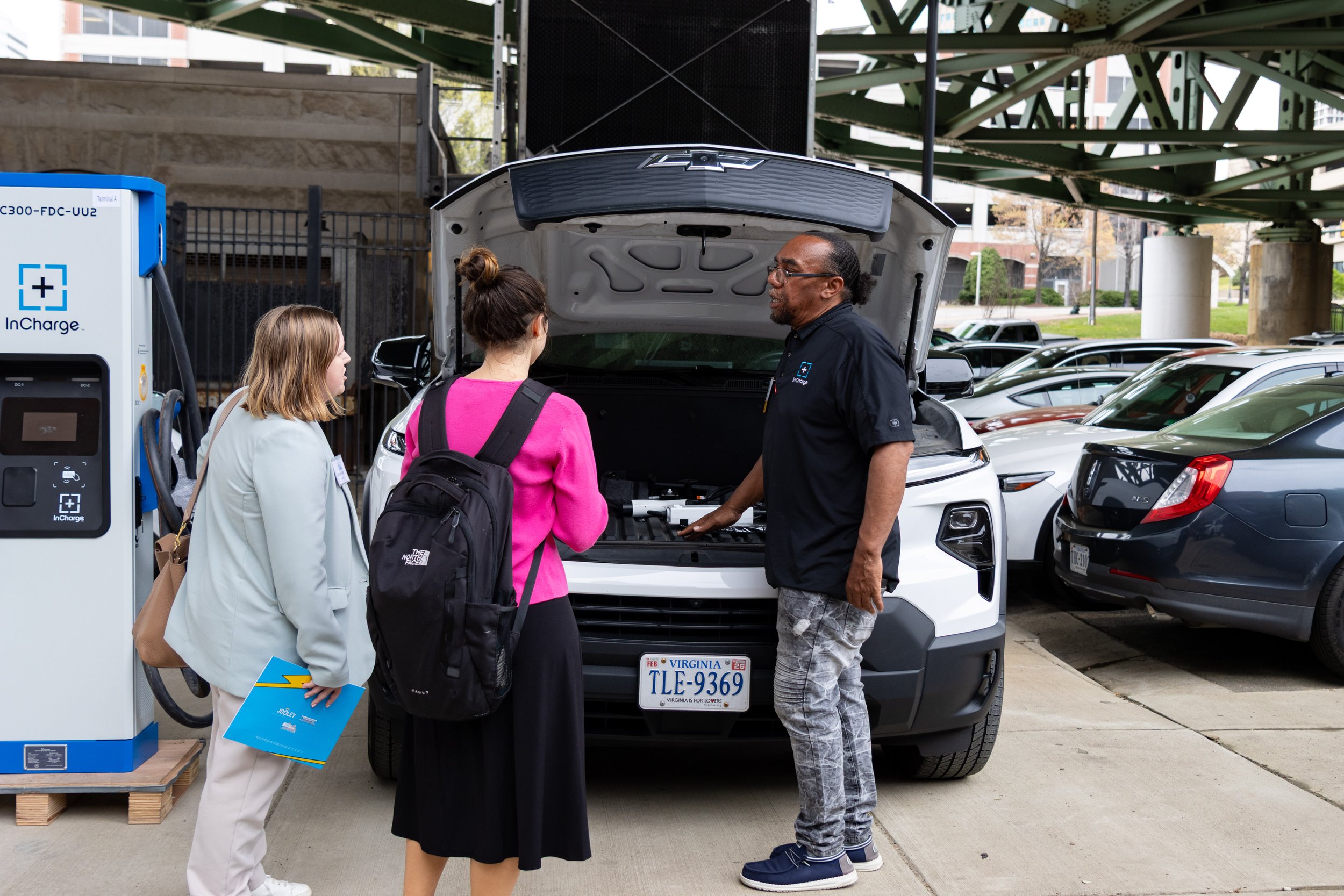
Access to electric vehicle charging stations is essential to current and would-be EV users. Residents and commercial property owners may opt to install private charging stations to ensure reliable charging access for personal and fleet vehicles. Additionally, there are a number of publicly available charging stations located in and around the City of Richmond. See the section “EV Charging in the City of Richmond” below for more information on installing and accessing chargers.
3 Types of Charging Stations
Charging needs will vary across users depending on the battery capacity of their electric vehicle, daily use, accessory use and other factors (such as weather). More information about the different EV charging options is available below to help residents and businesses determine what may fit their needs.
-
A Level 1 charging system can be plugged into most grounded electrical outlets and is usually rated for 15 amperes at 120 volts common. Level 1 chargers operate at the slowest rate, at about two to five miles per one hour of charge. Owners of vehicles with small batteries, lower mileage needs, or those who can wait several hours while their vehicle recharges may find Level 1 chargers sufficient for their needs. Level 1 chargers are a viable charging option for all electric vehicles.
-
A Level 2 charging system requires a dedicated 240-volt circuit and charges at a rate of 10-20 miles per one hour of charging. Level 2 chargers are appropriate for most home and commercial applications. Charging at a much faster rate than Level 1 chargers, Level 2 chargers are the most commonly available type of EVCS. As with Level 1 chargers, they are a viable charging option for all electric vehicles.
-
A Level 3 charging system—or DC fast charger—is used in commercial applications. It is hardwired per the manufacturer and charges at a rate of 60-80 miles per 20 minutes of charging. Though the fastest type of EVCS, not all electric vehicles are compatible with DC fast charging or may only be compatible with certain fast charging systems. Before using DC fast chargers, electric vehicle operators should first determine whether their vehicle is compatible with the charging system or whether they will need any adapters to connect to the system.
EV Charging in the City of Richmond
EV Charging on Private Property
Residents, multifamily properties, and businesses may choose to install an EV charger on private property. Installation of charging equipment may require permitting and fees through the Department of Planning and Development Review Permits and Inspections Office. Any EV charger installation must comply with the City of Richmond zoning code.
All applicants must apply for and receive an electrical permit through the City of Richmond Online Permit Portal before installing any charging equipment on their property. Residents are responsible for complying with all relevant sections of the National Electric Code (NEC) and National Fire Protection Association (NFPA 70). Contact a local electrician with questions.
Multifamily and Commercial Charging Programs
Dominion Energy’s EV Charging Access Program offers free installation and maintenance of EV charging stations in fleet, public, workplace, and multi-family housing locations. Certain eligibility requirements apply - visit Dominion’s site to learn more. The 2026 application window closes on March 26.
Dominion Energy offers commercial charging solutions, installing both Level 2 and DC Fast Chargers. Visit their site to learn more.
EV Charging in the Public Right-of-Way
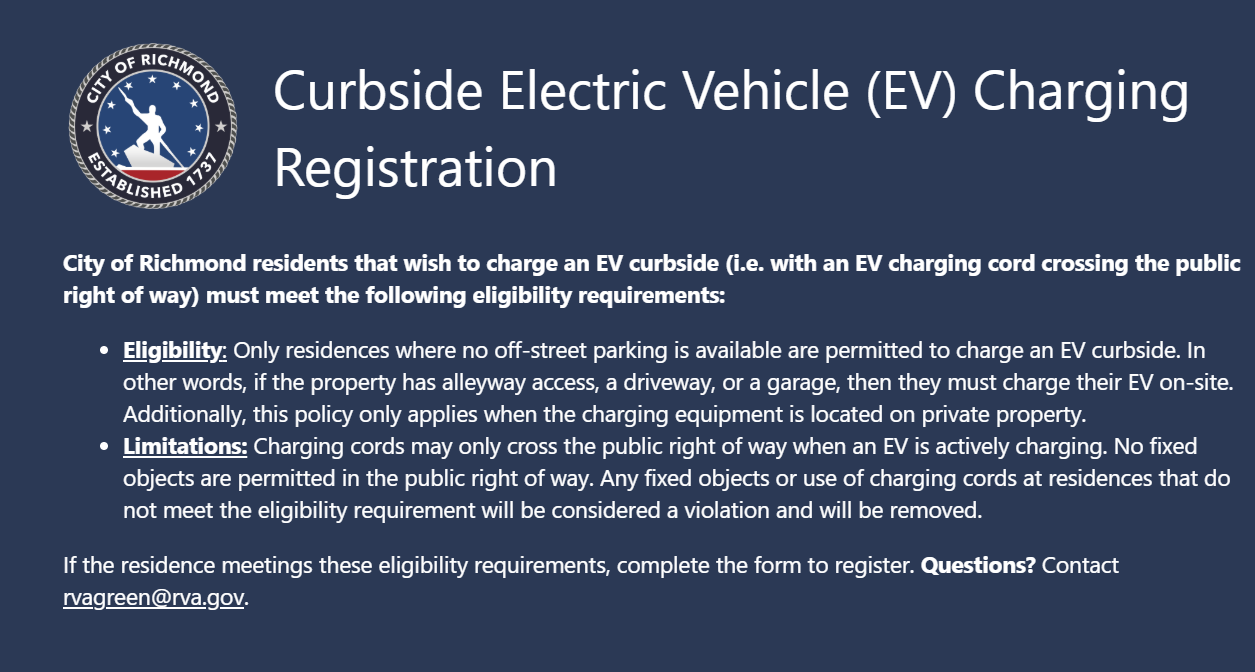
The City of Richmond does not permit EV charging infrastructure to be installed in the public right-of-way. However, for those residents that do not have access to off-street parking (i.e. residents that do not have access to an alleyway or driveway), the City has developed guidelines that may permit EV charging cords to cross the public right-of-way safely. Charging cords are only permitted to cross the public right of way when there is no off-street parking on the property and then only when a vehicle is actively charging.
If you wish to charge your EV at home and do not have access to off-street parking, please complete this registration form and read the City’s Electric Vehicle Charging Guidance for Crossing the Right of Way closely to learn how to safely charge your EV curbside.
Publicly Accessible EV Chargers
There are many publicly accessible chargers located in and near the City of Richmond. EV users may search for charging stations by using station locator maps, such as the Department of Energy’s Alternative Fueling Station Locator or through Virginia Clean Cities.
EV Charging Infrastructure Incentives
Many state and federal incentives help support individuals, businesses, or organizations making the transition to electrification, including:
Additional Resources
Use the Fueleconomy.gov's side-by-side comparison tool to compare fuel savings for EVs and conventional vehicles.
Watch Fairfax County’s “Myths vs. Facts: Electric Vehicles” YouTube playlist to learn about common myths and facts about electric vehicles and how EVs can help you be carbon free.
Watch Fairfax County’s EVen Now – Going Electric Is a Smart Choice! Webinar, helping make the case for EV adoption for businesses.
Watch a webinar with two EV experts from Plug In America and Virginia Clean Cities.
Virginia Clean Cities has a great resource library on many EV topics, including: