East End Solar Farm & Pollinator Meadow
Join the City of Richmond for an opportunity to transform a capped landfill into a sustainable energy hub with solar arrays and pollinator gardens.
Project Overview
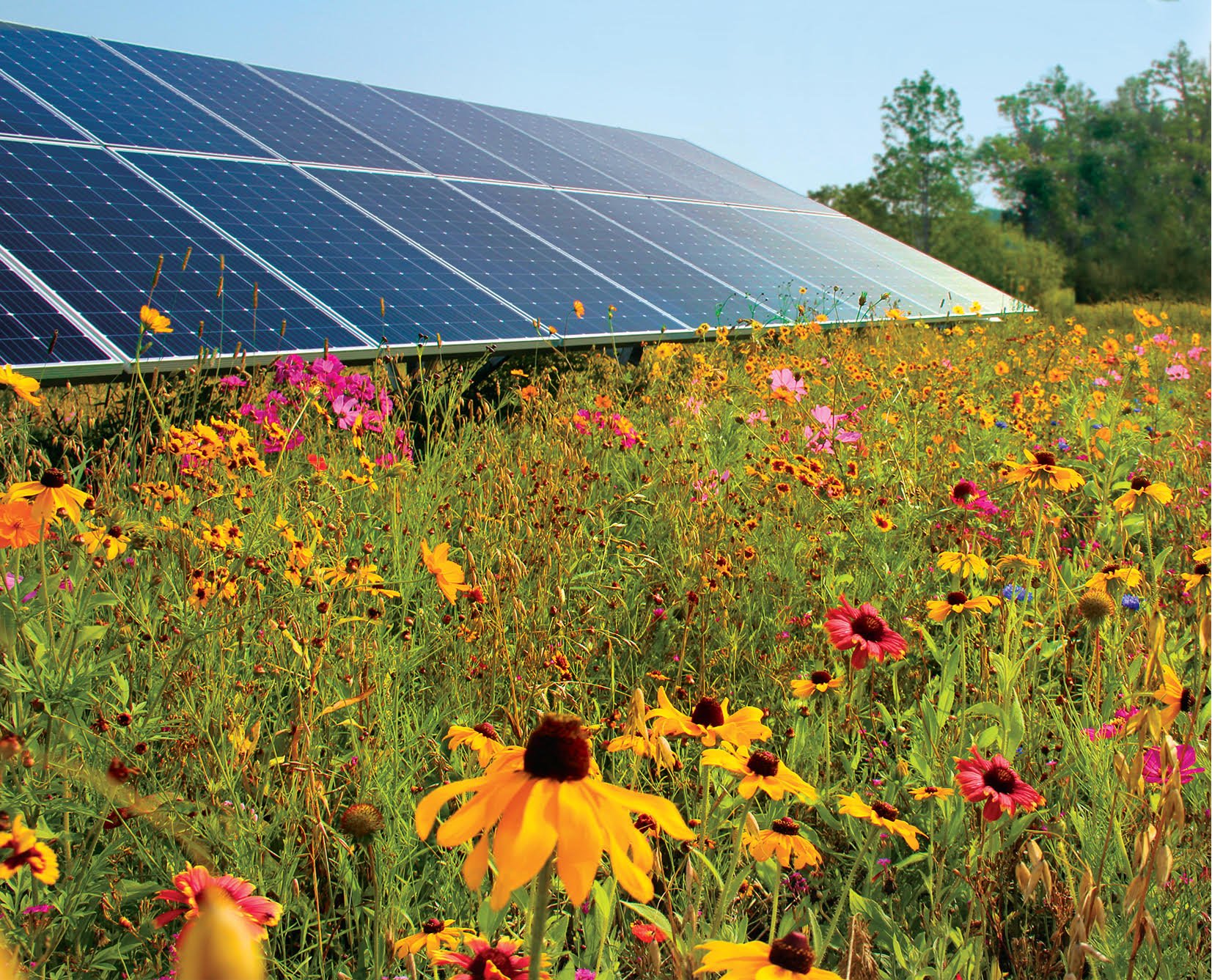
The City of Richmond is working with Amaresco to repurpose the capped landfill located at 3800 East Richmond Road into a solar farm and pollinator meadow. Once completed, this solar array will add clean energy to the local power grid and restore natural habitat for local pollinators. Solar projects like this bring Richmond closer to achieving the Net-Zero GHG emissions target established in the RVAgreen 2050 Climate Equity Action Plan while offering community benefits developed alongside residents of Richmond’s East End.
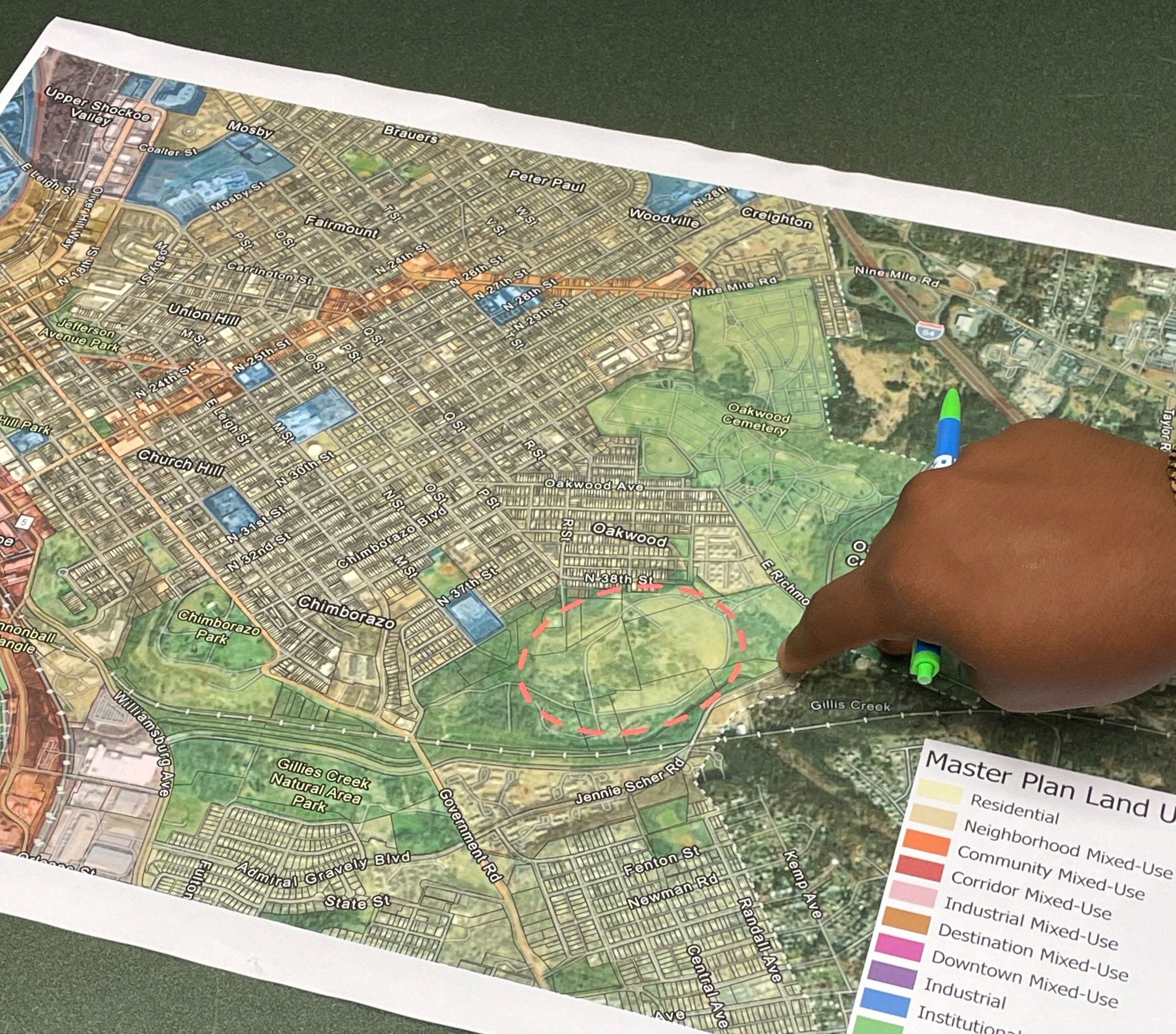
The City operated a landfill on this site from the 1960’s until September 1983 when it was closed, capped, and monitored for methane emissions. The area around the capped landfill currently operates as a green waste collection site and recycling convenience center for the City’s Department of Public Works (DPW), Parks, Recreation, and Community Facilities (PRCF), and Richmond residents.
In keeping with Richmond 300, RVAgreen 2050, and all of the work being done across Richmond, the City’s commitment to centering our work in equity should be reflected in this project, throughout its lifetime. This includes being transparent and accountable in our projects, proactively informing community members of changes or major milestones, and ensuring that community members maintain the authority to self-determine what kinds of benefits various projects provide to their communities.
Learn More:
Project Timeline
Community Engagement • Summer 2024
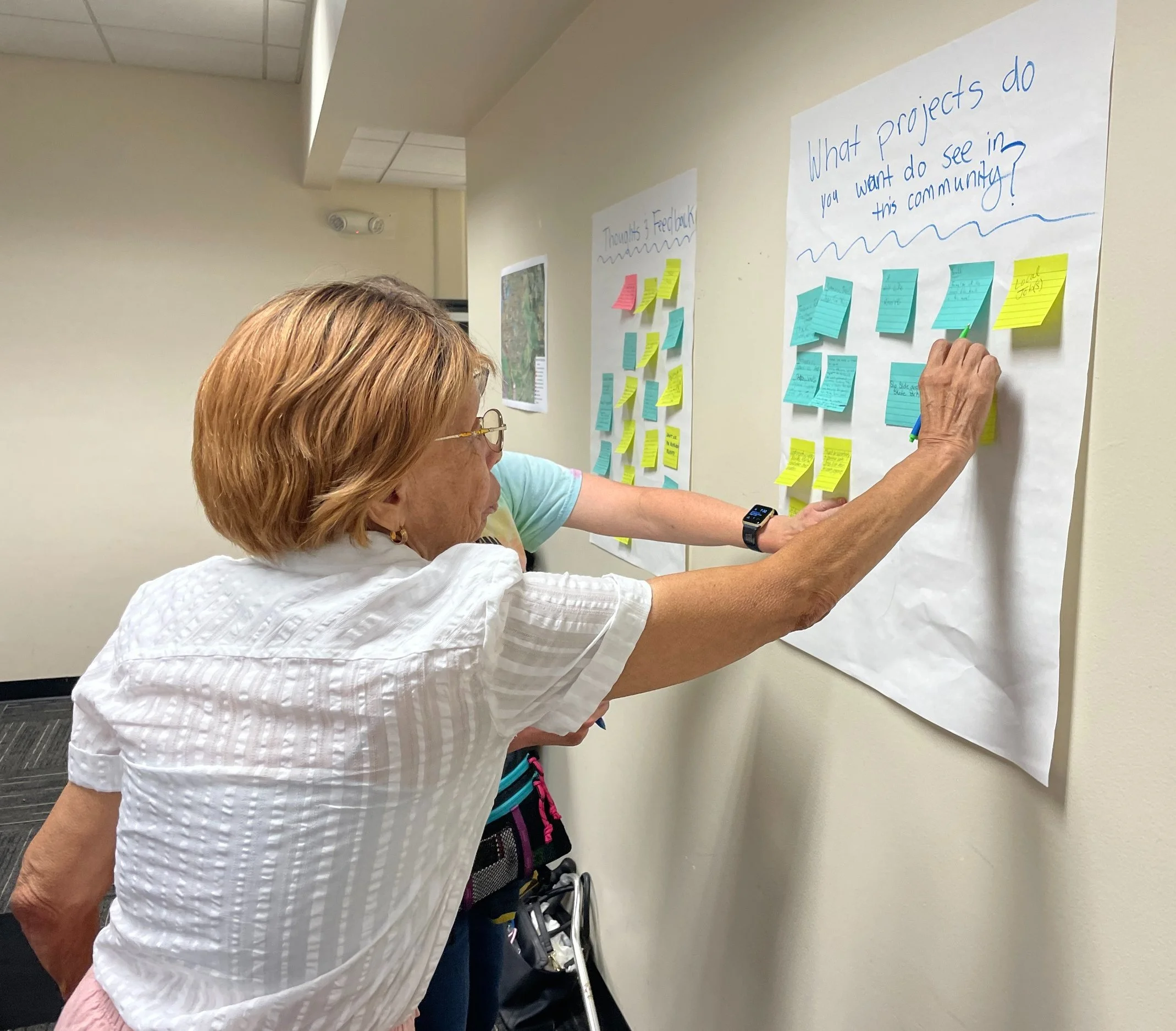
The Office of Sustainability held three public engagement sessions on and distributed a survey to ensure residents of nearby neighborhoods were included in the decision-making process.
Request for Information (RFI) • Summer 2024
Following engagement, the City of Richmond issued a Request for Interest (RFI) to solicit innovative responses from experienced solar development teams to install and operate the solar farm and pollinator meadow. Learn more here.
Finalist Selection • Spring 2025
The City evaluated RFI proposals and selected Amaresco to develop the solar farm and pollinator meadow.
Community Benefits • Summer/Fall 2025
The City and Amaresco held four community sessions with nearby neighborhoods to collaboratively discuss how best to deploy community benefits from the final Lease Agreement. Learn more here
Zoning Review & Engineering • 2026
The project has completed its zoning review, confirming the solar farm is a permitted use for the site. Engineering design work is underway, using information from the environmental studies, property survey, and soil testing. Learn more here
Site Plan Approval & Construction • 2027
Once the site plan is approved, Amaresco will proceed with the construction phase of the solar array.
Commercial Operation • 2028
Following construction of the solar array and transmission lines, the array is expected to begin generating solar power for the grid by 2028.
Pollinator Meadow Installation • 2029
Installation and maintenance of the pollinator meadow will begin once construction of the solar array is complete.

Project Updates
Thank you to the residents who took part in our Community Benefits Survey through online responses and in person conversations. Priorities were clear and consistent across the East End, including Church Hill, Fulton Hill, and District 7.
Environmental review completed: Studies found no threatened or endangered plants or animals on the project site.
Cultural resources review completed: No historical or archaeological resources were found that would be affected by the project.
Wetland review completed: A small wetland was identified near part of the site. The project will maintain a protective buffer around it. This does not change the project schedule or budget.
Brownfield designation received: The site has officially been recognized as a brownfield, supporting redevelopment of the former landfill.
Utility coordination progressing: Dominion Energy has completed its initial review of the first phase of the project and identified the utility upgrades needed to support it.
Where Things Stand on Permitting
The project has completed its zoning review, confirming the solar farm is a permitted use for the site. Engineering design work is underway, using information from the environmental studies, property survey, and soil testing. The next major approval step is the site plan approval process. Here is a look at the key milestones ahead, based on the developer's updated project timeline.
Milestones & Status
Zoning and by right use determination - Completed
Environmental studies and wetland review - Completed
Site plan approval process - Expected mid 2027
Financial close - Expected mid 2027
Construction start (notice to proceed) - Expected mid 2027
Commercial operation date - Expected mid 2028
Pollinator Meadow Installation and Establishment - Expected mid 2029
What's Happening Now
Scheduling soil testing to help design the solar array foundations.
Preparing a summary of community benefits and outreach.
Completing research on nearby property titles to support final design.
Timelines for future milestones are estimates provided by the developer and may shift as engineering, permitting, and utility coordination continue.
Community Benefits Agreement: What We Heard
Thank you to the residents who took part in our Community Benefits Survey through online responses and in person conversations. Priorities were clear and consistent across the East End, including Church Hill, Fulton Hill, and District 7.
Top community priorities identified through the survey:
Green infrastructure (top choice): $125,000 is set aside to improve environmental quality and reduce flooding through rain gardens, stormwater features, and new trees and native plantings.
Youth engagement and workforce: $125,000 is set aside to create pathways for the next generation through paid internships, green job training, youth leadership development, and school based environmental education.
Parks, art, and beautification: $125,000 is set aside to create safer, cleaner, and more vibrant public spaces through park upgrades, shade structures, public art, and educational signage about solar energy and pollinator habitats.
Art and educational installations: $125,000 is set aside to support public art and educational features that beautify the project area and help residents understand clean energy.
Residents were also asked how the $500,000 in community benefit funds should be managed. By a wide margin, residents said they prefer prioritizing long term, high impact projects over smaller, short-term fixes.
When asked what should be included in the official Community Benefits Agreement, residents emphasized:
Transparency: Clear accountability on how funds are used.
Direct support: Programs that help families, such as weatherization and energy efficiency.
Greener spaces: More native plants and renewable energy on community sites.
Connectivity: Making sure the benefits stay rooted in the East End.
What happens next:
Drafting: Survey feedback will directly guide the East End Solar Farm Community Benefits Agreement.
Refining: Draft project categories will be created based on the top priorities above.
Community engagement: We will schedule upcoming opportunities to refine these ideas with the community as the project progresses. Much of this work will occur closer to the construction timeline in 2028.

Next Steps
The Office of Sustainability will work with City Council and the community to get more specific on the community benefits categories. For more information or questions, please reach out to Michael Smart, Sustainability Engagement Manager, Office of Sustainability at michael.smart@rva.gov
FAQs: How do Solar Meadows work?

What is a solar farm?
A solar farm is a large-scale installation of photovoltaic (PV) panels mounted directly to the ground. The renewable energy produced by a solar farm is fed into the local energy grid. Generating energy this way avoids the greenhouse gas emissions that are caused by the burning of fossil fuels, such as coal, diesel, and natural gas.
What is a pollinator garden?
A pollinator garden is a specially designed garden consisting of plants selected to attract and support pollinating insects and other beneficial creatures. These gardens are typically filled with a variety of native flowering plants that provide food, pollen, and habitat for pollinators such as bees, butterflies, beetles, birds, and bats.
Why combine the two?
Traditionally, the land underneath solar panels goes unused or requires regular maintenance. Transforming this space into a pollinator garden can not only reduce maintenance costs but can support local ecosystems, promote biodiversity, and enhance solar panel efficiency through temperature regulation. Learn more here!
Why install a solar meadow on a capped landfill?
Solar meadows can be a practical solution for capped landfills. They offer a productive use of an otherwise unusable parcel and reduces the need for solar development on working farmland or precious ecosystems. Solar meadows can generate lease income for municipalities while ensuring maintenance of former landfill by the solar management company.
Resources:
Read the EPA’s Citizen’s Guide to Capping.
Read this Time article U.S. Landfills Are Getting a Second Life as Solar Farms.
