Resilience Toolkits
As climate change continues to bring warmer temperatures, increased precipitation, and more frequent extreme weather events to Richmond, preparing our neighborhoods for climate impacts is vital to fostering healthy, equitable, and sustainable communities.
Resilience Toolkits are practical, actionable guides created by the City of Richmond’s Office of Sustainability to help residents, neighborhood associations, local business owners, and property managers take direct action against local climate risks. Grounded in the goals of the RVAgreen 2050 Climate Equity Action Plan, these toolkits translate high-level climate strategies into step-by-step solutions for everyday use.
By empowering community members with low-cost adaptation strategies, these toolkits help foster community-led climate resilience block by block, protecting vulnerable populations, enhancing public health, and strengthening our local economy for all Richmonders.
Available Toolkits
Explore our growing collection of climate resilience guides below:
Richmond Cool Kit – Strategies for urban heat mitigation including urban greening, shade, smart surfaces, and depaving.
Richmond Shade Kit – Practical guidelines for shade planning, permitting, and installation on private property and across the public right-of-way.
Coming Soon: The Flood Kit
We are currently developing the Richmond Flood Kit to help residents and business owners mitigate urban flooding, manage stormwater runoff, and safeguard properties against heavy rainfall events. Stay tuned for updates as we work to launch the Flood Kit to further strengthen Richmond’s climate resilience!
Richmond Cool Kit
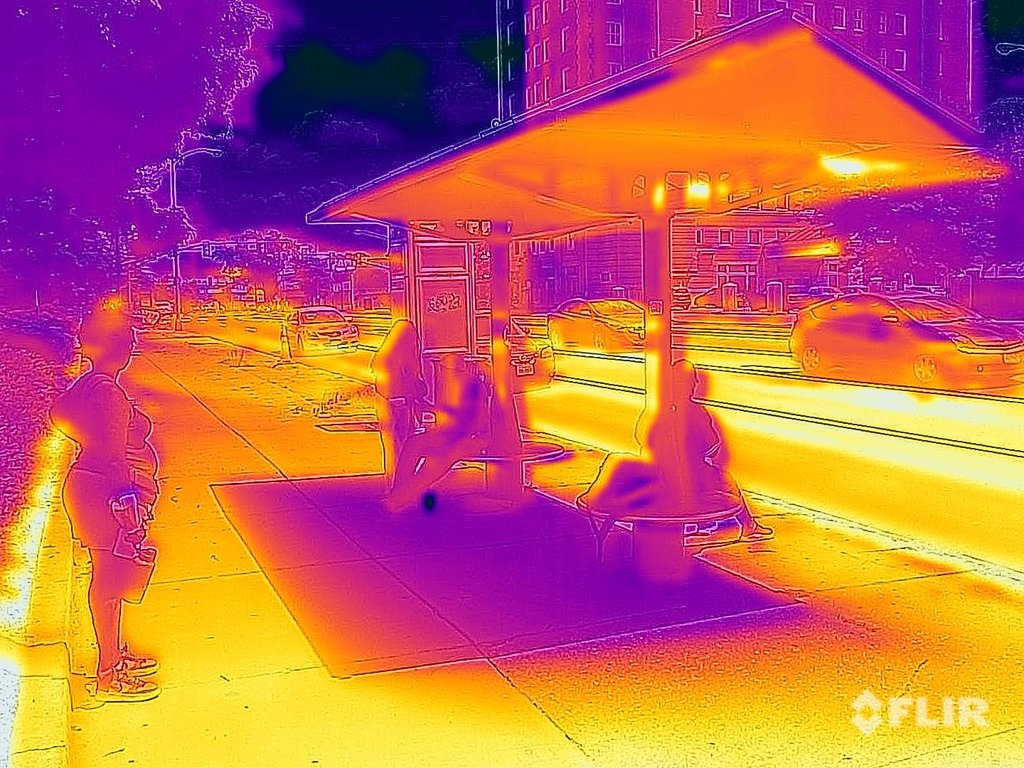
The Richmond Cool Kit lays out twenty-five evidence-based cooling strategies that can reduce surface temperatures in urban and suburban communities across the City of Richmond. These strategies can help protect our natural environment, enhance connectivity across the City, and improve public health and safety.
These cooling strategies can be applied to publicly-owned properties, the public right-of-way, and privately-owned spaces. The Richmond Cool Kit is designed to support the work of City of Richmond project leaders as they plan, build, and maintain our built environment, and it is also a resource for the public. Community members can apply these strategies to their homes, businesses, and in their communities to reduce heat risk.
The Richmond Cool Kit establishes a shared understanding of the causes and impacts of urban heat, outlines proven cooling strategies, and promotes community resilience to extreme heat and flooding. This document proposes four priority resilience goals:
Cool neighborhoods, homes, and businesses
Cool walking, biking, and transit infrastructure
Cool community spaces, parks, libraries, and schools
Increased climate resilience and well-being for all Richmonders

Cooling Strategies
This toolkit outlines 25 cooling strategies that can reduce the built environment’s contribution to urban heat and foster heat resilience across Richmond. These strategies can inspire new projects or they can be integrated into future City capital improvement projects (CIPs) or maintenance projects. These strategies apply to private property and can be deployed by homeowners, renters, businesses, organizations, and community groups. Refer to the Richmond Sustainability Design Standards for a deeper dive on these strategies.

Street trees, reforestation, bioretention systems, mini-parks, and water features cool down neighborhoods by providing both shade and evapotranspiration cooling effects. By making the city more green and less grey, we can cool communities and reduce flooding.
Urban Greening

Shade sails, lightweight canopies, and awnings provide affordable and quick-to-implement heat relief. Built shade structures and strategic building design can provide long-term protection but require more time to design and implement.
Shade

Cool roof technologies, light-colored pavements, and heat-resistant materials reflect, rather than absorb, solar radiation, which can reduce surface temperatures by up to 50-70°F. Solar panels shade buildings while generating renewable electricity while green roofs reduce stormwater runoff and increase habitat for pollinators.
Smart Surfaces

Depaving is the strategic removal and replacement of underutilized or unnecessary impervious surfaces such as parking lots, sidewalk squares, and wide streets. Once removed, these spaces can become green infrastructure, such as The Green at the Science Museum of Virginia. This formerly 381-space parking lot was depaved and converted into a 2-acre public park.
Depaving
A Message from Danny
Cool Kit Summary
Richmond Shade Kit
Shade is vital infrastructure that lowers the risk of heat-related illness, protects workers, boosts foot traffic for local businesses, and creates cooler, safer, and more vibrant public spaces. Investing in shade can help offset these impacts—supporting customers, protecting workers, and fostering a more resilient summertime economy.
Building upon the foundation of the Richmond Cool Kit, the Richmond Shade Kit serves as a practical, comprehensive guide to help local businesses, property owners, and community members plan, permit, and install shade structures on private property and across the public right-of-way.
This guide is organized to explain key considerations and steps in the process:
Explore the different shade structure options available and identify what works best for your space.
Understand the limitations and requirements associated with each type.
Clarify the steps and processes needed to move from idea to installation
Whether you are exploring a simple installation or a more permanent structure, this guide is intended to help you navigate the process and take the next step.
How to Shade Your Business
Shade structures are more than functional improvements. They can also serve as placemaking elements and opportunities for creative design, contributing to the character, identity, and vibrancy of Richmond’s commercial corridors. The Shade Kit was developed to help more businesses add shade to their spaces to improve comfort for customers and employees, reduce heat-related health risks, support foot traffic and local economic activity, contribute to more vibrant, people-centered places, and expand heat resilience across the City.
Design Guidelines
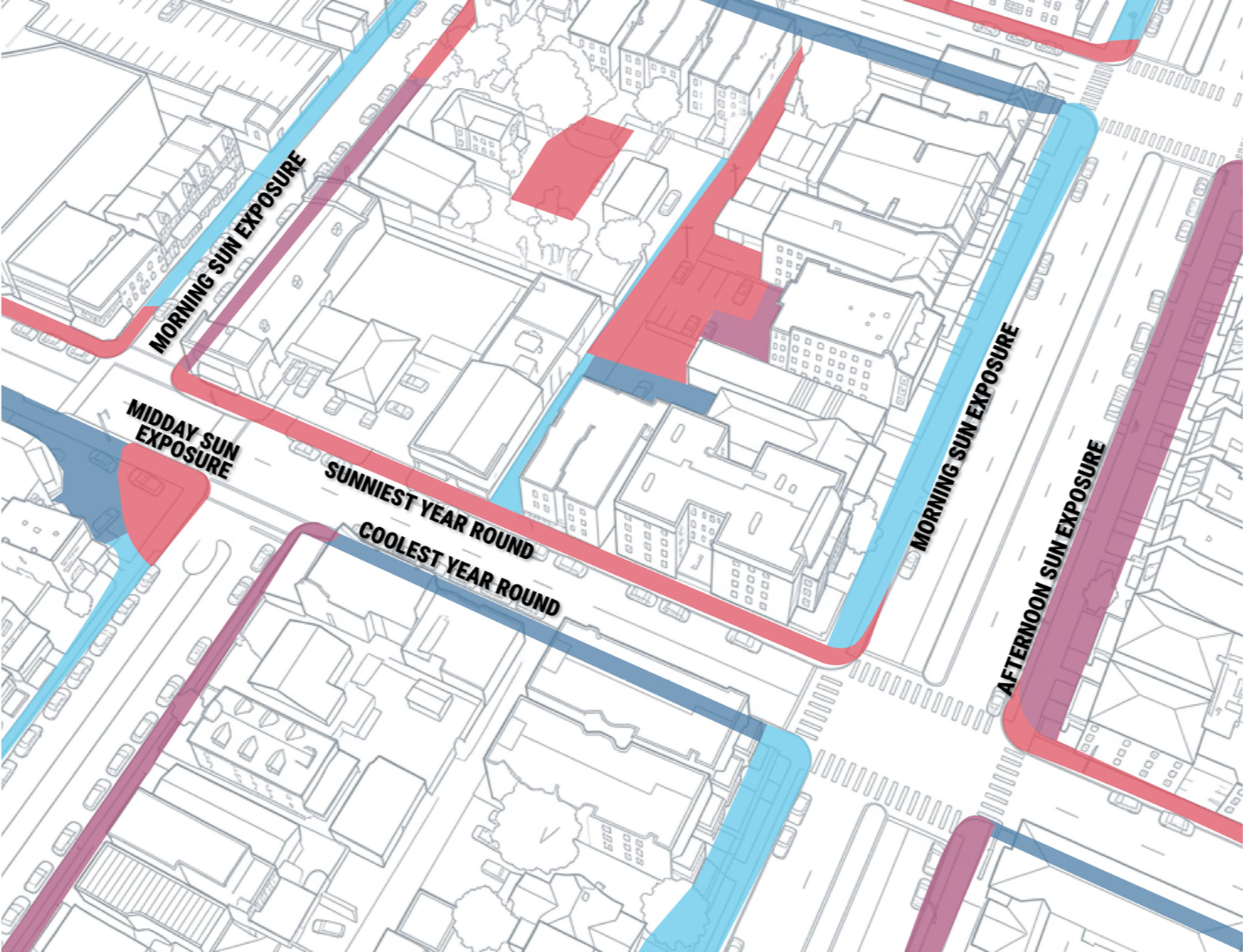
The Shade Kit outlines key considerations for designing and installing shade structures including material choice, solar orientation, structure size, location, cost, and structural engineering. These factors will help businesses select solutions that best fit their space, budget, and goals while maximizing comfort and performance
This toolkit provides a practical guide for property owners, starting with key preparation steps like crosschecking zoning maps, utility locations, right-of-way boundaries, and historic district designation. The guides’ spatial matrix and flowcharts help readers navigate the required permits for four primary types: Shade Only, Sidewalk Café + Shade, Parklet + Shade, and Private Patio + Shade.
Implementation Roadmap
Shade Catalog
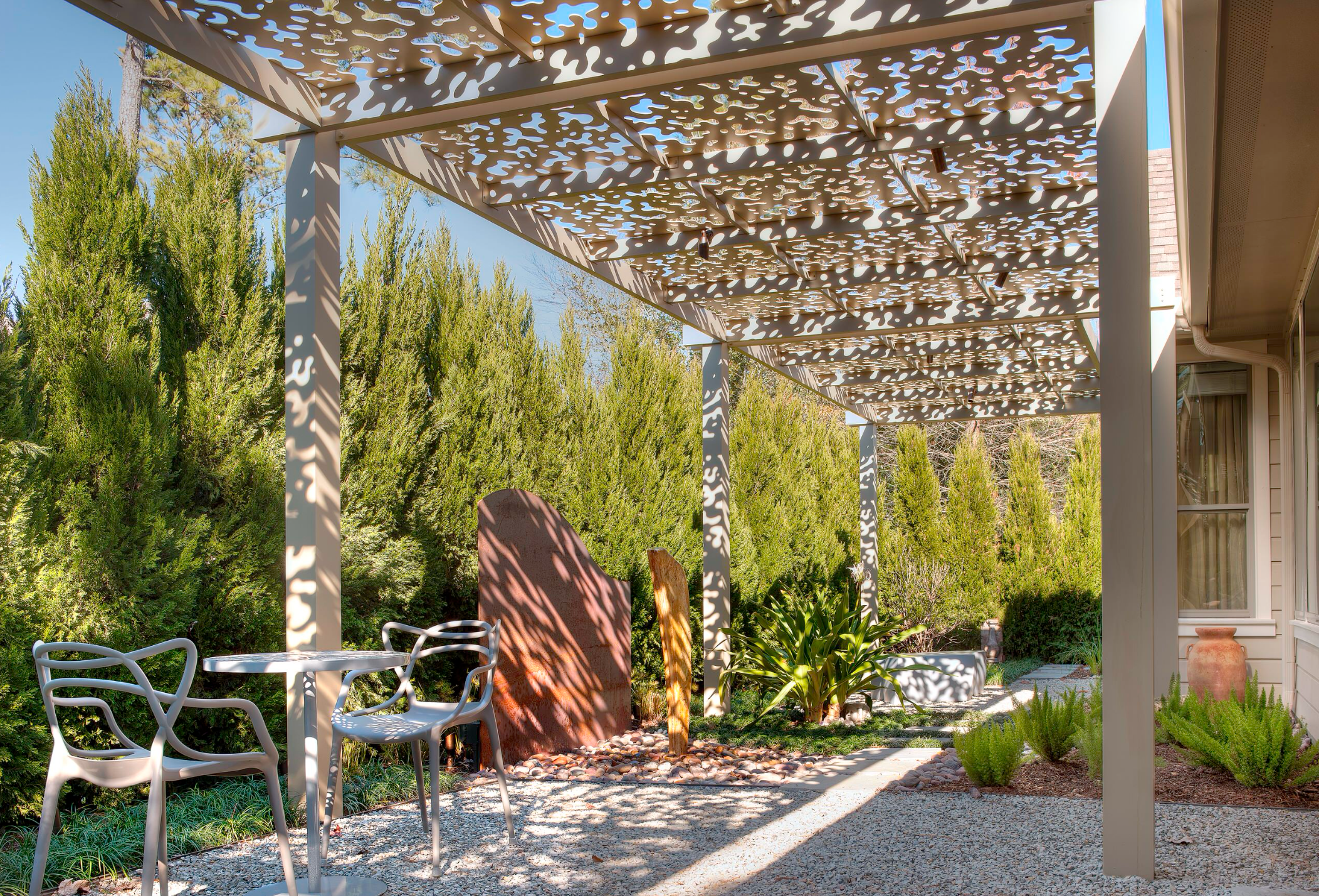
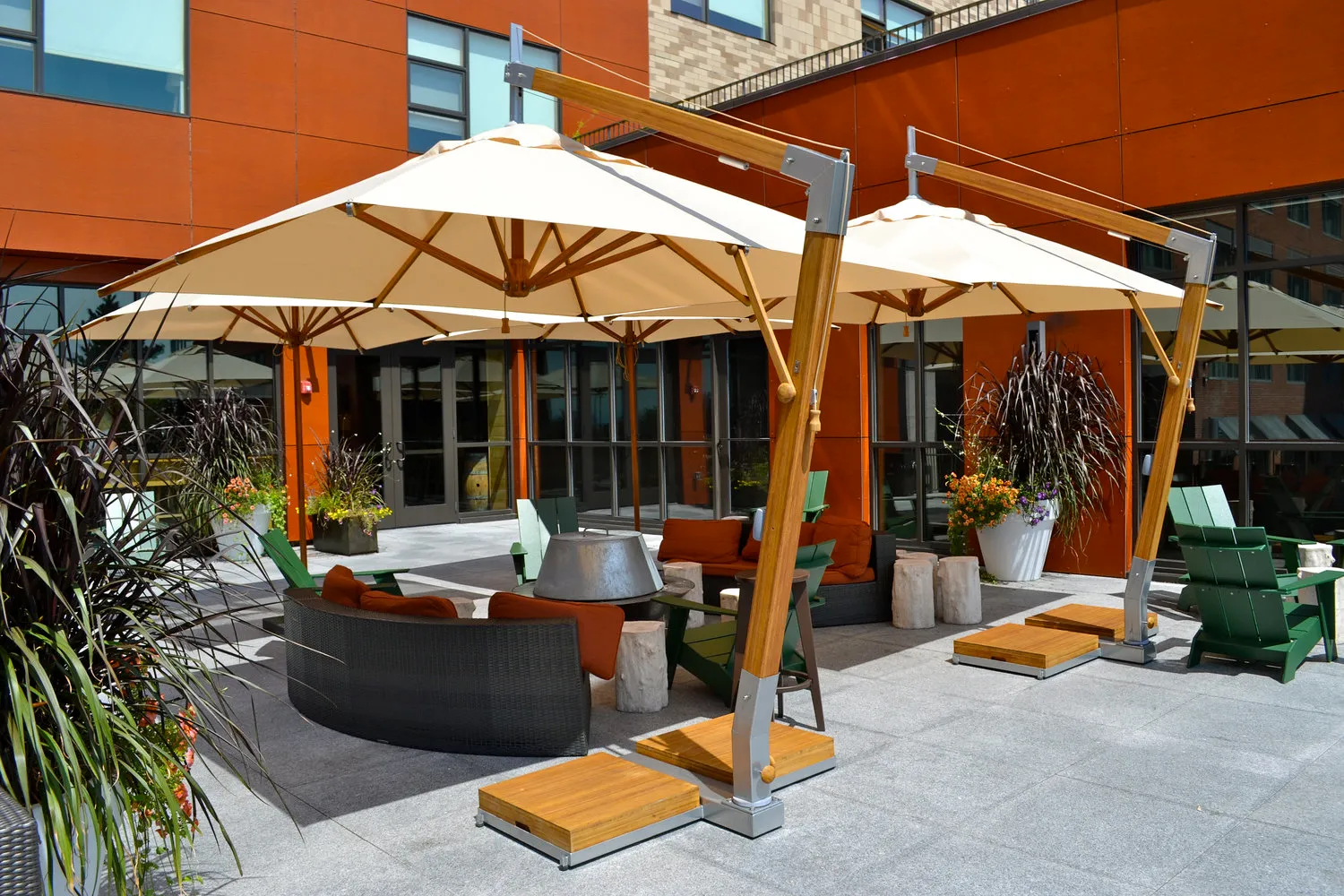
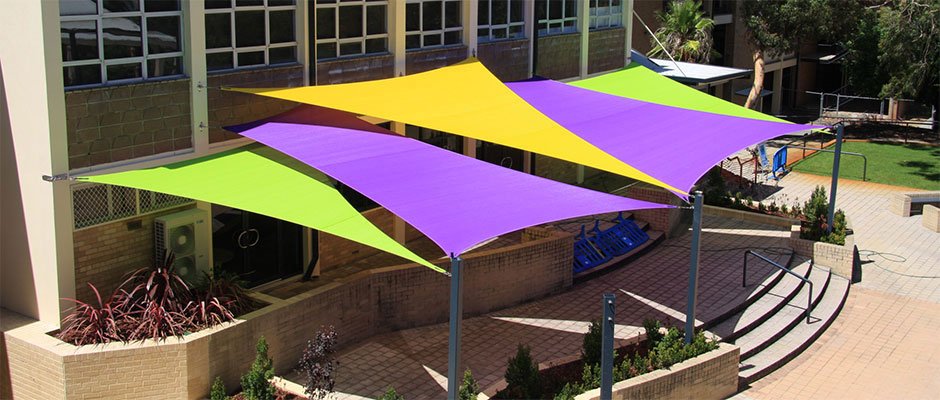
The Shade Kit profiles six specific options: umbrellas, shade walls, building-affixed awnings, shade sails, pergolas, and combination structures. These profiles detail suitable materials, optimal solar alignment, recommended dimensions, typical cost brackets, and primary location use-cases and make it easy for businesses to understand their options.
Installing shade in urban environments can be technical so the Shade Kit includes a glossary of regulatory terms including permits, historical reviews, and city board sign-offs. This section clearly explains the permitting process (Encroachment, Work in Street, Building, Sidewalk Café, COA, etc.) and the specific roles of municipal review bodies like the Urban Design Committee (UDC), Planning Commission, and Commission of Architectural Review (CAR).